What is AdBlue®?
32.5-percent urea solution
AdBlue® is a 32.5-percent aqueous reduction solution of the highest purity. The ISO 22241 standard ensures consistent quality. Catalytic converters can only be guaranteed by using AdBlue®.
Reduction agent in SCR Systems
AdBlue® is a non-toxic, transparent, synthetically produced solution that is used as a reduction agent in SCR systems (selective catalytic reduction) of diesel-powered vehicles. This reduces toxic NOx exhaust components into nitrogen, water and carbon dioxide.
Helps reducing nitrogen oxides
AdBlue® helps significantly reduce nitrogen oxides in the exhaust cleaning process. At STOCKMEIER Fluids, we are constantly striving to optimize this effectiveness and sustainably improve the market for the future.
AdBlue®
Also known under the name:
- AUS 32
- DEF
- Urea solution ISO 2224
Universal product Name
AdBlue® is the universal product name created by representatives of the petroleum industry, the chemical industry, the automotive industry and their suppliers. The terms "Ad Blu" or "Ed Blue" are not correct.
It is supplied from an additional tank in the vehicle. The exact dosing quantity is calculated by the electronics and dispensed into the exhaust tract (truck approx. 1.5 liters/100 km, car approx. 0.15 liters/100 km).
Frequently Asked Questions about AdBlue®
Is AdBlue® a hazardous substance?
No, AdBlue® is classified as neither a hazardous substance nor a dangerous good. The solution is non-flammable and poses a low risk to water. Nevertheless, it should be handled properly to avoid contamination and damage to equipment. Corrosion may occur upon contact with certain metals.
Can AdBlue® freeze?
Yes, AdBlue® freezes at around -11 °C. However, freezing does not affect the quality of the product. After controlled thawing, AdBlue® can still be used. Many modern vehicles are fitted with heated AdBlue® systems, which ensure safe operation even at low outside temperatures.
What happens if the AdBlue® tank is empty?
In vehicles with SCR technology, the driver is alerted in advance when the AdBlue® level is low. If the tank is not refilled in sufficient time, the vehicle may not be able to restart after being switched off, depending on the manufacturer. This is to ensure that statutory emission limits are consistently met.
Can I refill AdBlue® myself?
Yes, you can easily refill AdBlue® yourself. It is important to use clean equipment and avoid contamination. Even the smallest amounts of dirt, oil or fuel can impair the quality and damage sensitive components of the SCR system. The vehicle manufacturer’s instructions should always be followed.
What happens if AdBlue® gets into the diesel tank?
AdBlue® must never be poured into the diesel tank. Even small amounts can cause significant damage to the fuel system and the engine. If AdBlue® accidentally enters the diesel tank, the vehicle must not be started. In this case, it is advisable to contact a specialist workshop immediately.
How much AdBlue® is used?
AdBlue® consumption depends on the vehicle type, engine specification and usage profile. For passenger cars, consumption is typically around 1 to 3 per cent of diesel consumption. For commercial vehicles, it may be higher depending on driving style and area of use. Modern engines automatically dispense the required amount as and when needed.
What is AdBlue® made of?
AdBlue® consists of 32.5 per cent high-purity urea and 67.5 per cent demineralised water. The quality and purity of the product are crucial for the reliable operation of SCR systems. AdBlue® is therefore manufactured and tested to strict quality standards in accordance with ISO 22241.
Why is the quality of AdBlue® so important?
The SCR technology in modern diesel vehicles relies on AdBlue® of a defined purity. Contaminated or non-compliant products can damage sensors, pumps or catalytic converters. High-quality AdBlue® in accordance with ISO 22241 helps to avoid repair costs and ensure the full performance of the exhaust after-treatment system.
How does AdBlue® contribute to environmental protection?
AdBlue® reduces harmful nitrogen oxides (NOx) in the exhaust gases of diesel engines. In the SCR catalytic converter, these emissions are converted into nitrogen and water. AdBlue® thus makes an important contribution to air quality and helps ensure compliance with current emissions regulations.
Which vehicles and machinery use AdBlue®?
AdBlue® is used in numerous diesel-powered vehicles and machines fitted with SCR technology. These include cars, vans, lorries, buses, agricultural machinery, construction machinery and various special-purpose and commercial vehicles. A suitably equipped exhaust after-treatment system is always required.
Products
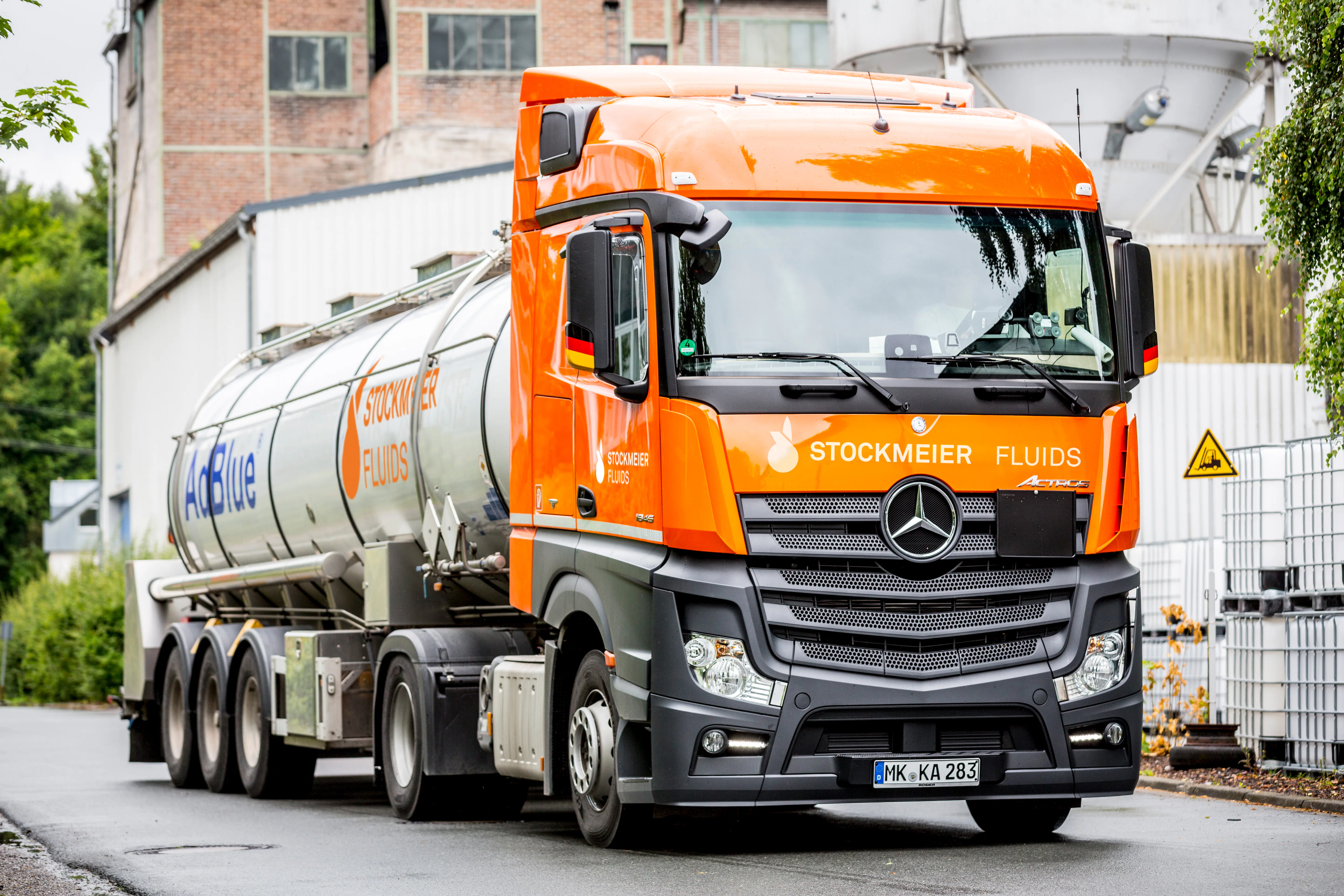
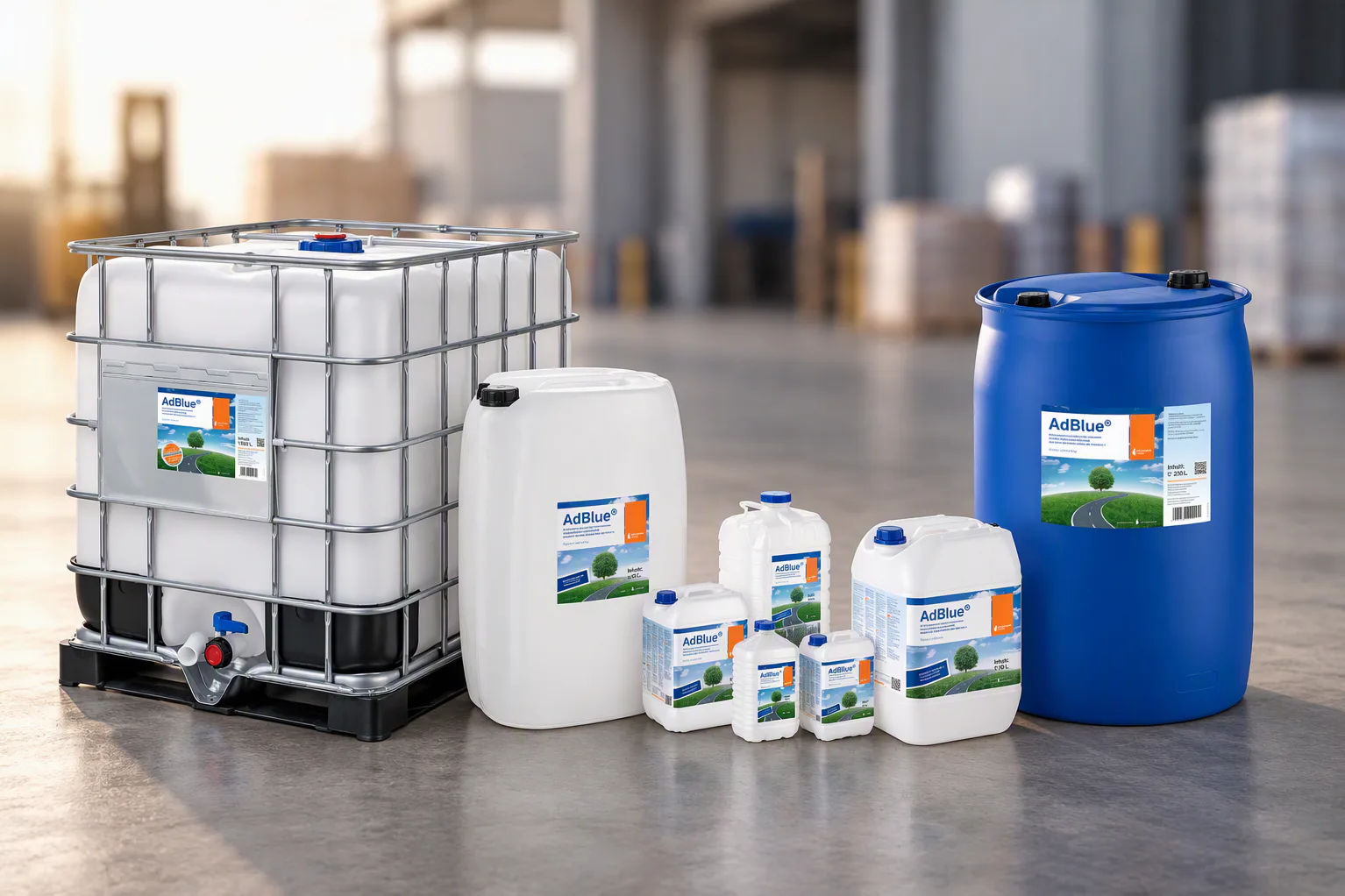
From canisters to tankers: our AdBlue® products
Flexible, secure and tailored to your needs
A reliable and continuous supply of AdBlue® is essential for compliance with current emissions standards and the trouble-free operation of vehicles and machinery fitted with SCR technology. To meet a range of requirements, we offer AdBlue® in various container sizes and delivery formats – from canisters and drums to IBCs and direct delivery to storage tanks.
Discover our range and find the right solution for your workshop, fleet, agricultural operations or industrial needs.